Monday, June 11, 2018

VN 4: Sitting, or The Crouch


Perhaps she recycles paper.

To rest, she sits on the sidewalk on a piece of the ubiquitous low red or blue plastic furniture--a stool or a low chair. Plastic makes sense in Vietnam given that the weather is always hot (at least by standards set by the northeast US) and that when it rains, it rains. Think a rain whiteout.

But all Vietnamese can squat--in effect, sitting without a piece of furniture. Which is to say they don't need furniture in order to rest.

Life is lived on the street.

Saturday, June 9, 2018

VN 2: Yoke Lady


Especially when cars were fewer than they are now and Vietnam was more a developing nation than it is now, one of the more you-can't see-this-at-home sights were the yoke ladies.

They were (and still are) traveling sellers of fruit (usually only one kind at a time, depending on the season); sellers of bottles of water (by reputation the more reliable and safe is La Vie, bottled by Nestle)--or of postcards, trinkets and what have you. Whatever might sell.

Or she just carries whatever she has from here to there.

Or she may be carrying a small kitchen, basically, and for a price she will pour and cook some  batter and give you a small waffle to eat as you walk around.

Some loads bounce more than others as she walks along.

VN 3: Yoke Lady, Part 2


A closer view.

Always friendly, always willing to sell you whatever they have: lychees, rambutan, dragonfruit, mangos. The rule in Vietnam is that buyers are supposed to bargain over the price--politely and in a friendly fashion so that no one loses face--and although I did do some of that, when it came to the yoke ladies, I never really tried too hard. Covered to protect their skin from the sun, they walk and walk. 

If I am not in the market for what they are selling, they smile and nod and move on, as do I.

One yoke lady who found me on a beach near Danang told me, "You no buy, I no eat. Babies no eat." I was going to buy some of her lychees anyway, and when I did, she squatted down next to me and  ate them with me in a companionable silence, the two of us just smiling and looking out at what the Vietnamese call the East Sea (and what we know as the South China Sea).

Monday, June 4, 2018

VN 1: From Galaxy Hotel, Hanoi


Of course before I went to Vietnam for the first time in 1998 I read everything I could get my hands on. There weren't too many guidebooks for tourists, though, and as I recall there was one AOL interest group about Vietnam that had a total of three members, one of whom was me. (One of those members warned me that the weather was "sweltering" which proved to be an understatement. But still I remember reading it.)

So based on a recommendation in the Lonely Planet guidebook, I chose a three-star business hotel in Hanoi, Galaxy Hotel (now permanently closed) on Hang Cot, near the Old Quarter. My room was more than basic, had AC, hot water and a few Vietnamese TV channels, and except for one early afternoon, the electricity worked. The location was close enough to the tourist sights but it was also quiet--an amenity not all hotels in high-volume Vietnam (or maybe anywhere) can offer, truth be told.

The pretty much all-glass Galaxy Hotel  lobby looked out on a roundabout, and during the late afternoons when I sat to cool off and watch the traffic, I was usually offered a bottle of water or a Tiger Beer. Since at that time (more than these days), traffic moved like fish swim but with pedestrians, motorbikes, bikes and bigger vehicles just kind of making their way any way they wanted to, I had a lot to look at.

Saturday, June 2, 2018

Third Anniversary and Another Change


The short version: whoohoo! Three years of retirement already.

Three years ago on the Friday before Memorial Day weekend I moved the last boxes out of my office, and the following Tuesday the first thing I did was to check online to make sure the retirement incentive had been deposited.

It had.

I was free.

I was buoyant in ways I had not expected. A fried was right: when you do what your parents expect; as an adult, you do what your workplace requires, and in retirement (if the Fates allow, anyway), you do whatever the hell you want.

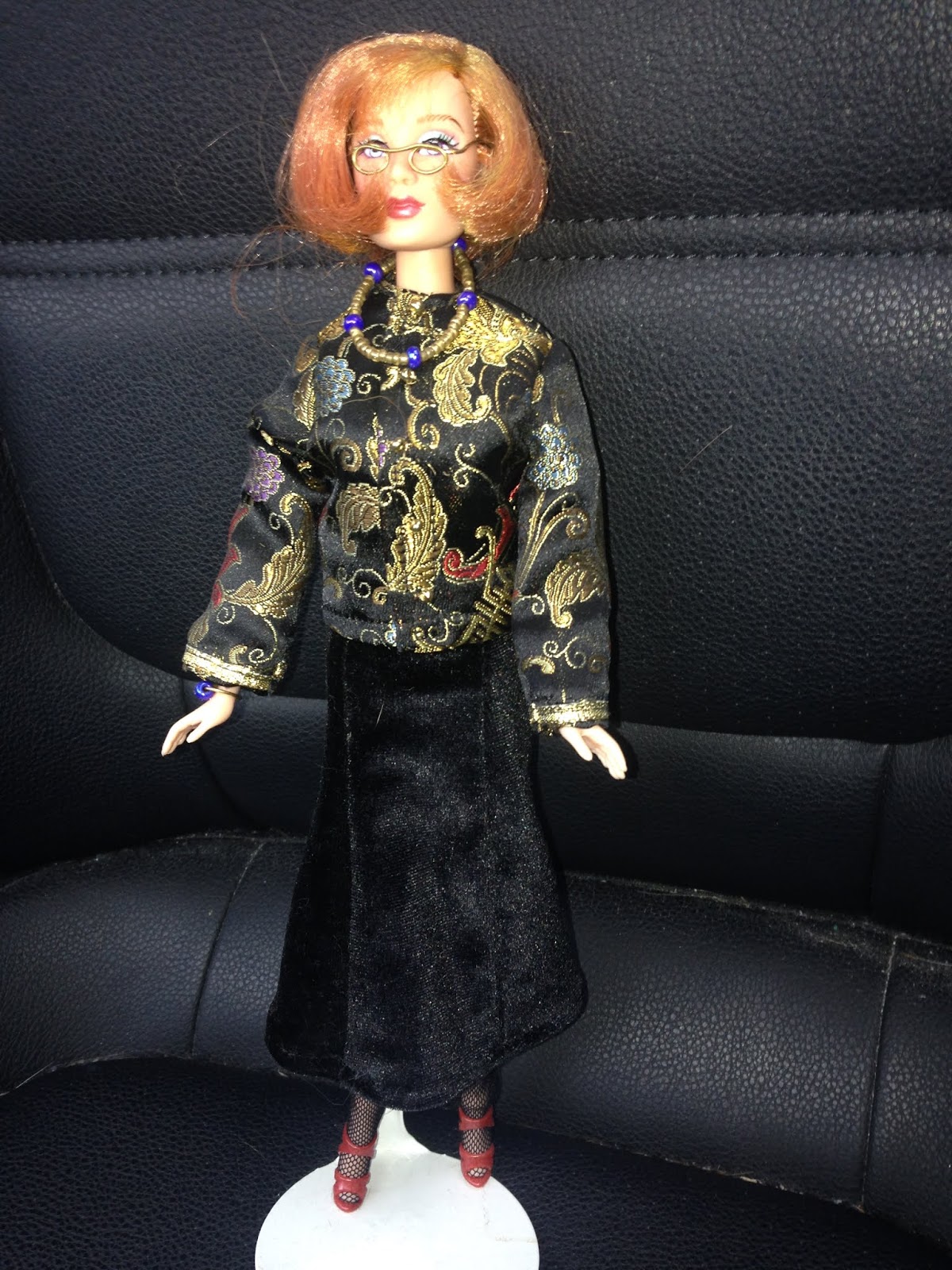
Although I may be overstating things, most days I feel more centered than I ever have. I do on some occasions miss some of the people I used to work with, but, truth be told, although I am on the far end of campus and in the pool twice a week,  I don't visit any of the places I used to go. I go in the door to the gym that is the farthest from any place I ever worked. That said, though,  I do still enjoy, in a one-time-removed kind of way, a good rumor about the place every once in a while. And I still have the doll (if that is what she is called) a colleague made of me (and of all the members of her academic department) from a good ten to fifteen years ago, and she--a version of me--is at the top of  this page).

On the whole, though: not my circus, not my monkeys.

I no longer insist on staying in bed until at least eight  in the morning in part because for decades I got up around six. I can get up whenever I want to. I can read (and write) anything I want (no memos, very little work-related email).

Most importantly--and I know how lucky I am to be able to say all this--as far as I am concerned, the brain cells I thought were gone because of work stress and meetings, gone from spontaneous combustion or for whatever other reason, seem to have regenerated. Or at least that is how things have felt for a while in the New World of No Stress from Work. I like to think this is true.

What I choose to do with my time organizes my time. Yes, I still make lists as I always have, and some days I am more productive than others; there are things to be said for ignoring most of the items on the list and sitting and reading on the back deck. Celebration takes lots of forms.

To celebrate this anniversary, this blog is going to take a detour--for how long I do not know. But for at least the next few weeks (and perhaps much longer), this blog's much more frequent postings will consist of photos and prose, mostly about my almost-twenty years visiting and traveling in Vietnam.

Come along with me.


Copyright 2018
Sandra Engel

Friday, March 30, 2018

Organ Recital, Or My Grandmother's Knees


It seems I spoke too soon.

But let me back up.

Long ago I read that journalist Martha Gellhorn (and incidentally one of Ernest Hemingway's wives) back in the day of land lines refused to answer the phone once she got older since so many of the conversations were what she called "organ recitals."

I know how she felt--and I have for some time. On the whole, I have never been a big fan of organ recitals. And, to be honest, I didn't really think I had too much to add to the conversation. I was luckier than I thought I was.

These days, though, the organ recitals seems a necessary part of getting caught up with friends. Most days we get over them and move on (which may or may not have been the case with Gellhorn's callers). We exchange updates about body parts the way other people talk about their children or sports.

Cataract surgery was a happy prelude. I had something to add to the conversation: I can see! I can see!

And then things went south. My body betrayed me.

My  knees have popped as long as I can remember. Finally, after all the follow-up appointments to the ophthalmologist were over, I went to an orthopedist. (I asked my primary care physician to refer me to someone who perhaps had grey hair and who had more than 1% body fat. I did not think a jogger-thin sports medicine guru would be a good match for me.)

So I had an x-ray on Knee One, the one I fell on in Vietnam in October, and the orthopedist told me most people over forty have arthritis and suggested a cortisone shot--and if the shot was needed too often, then a knee replacement would be in order. I asked about glucosamine chondroitin and the answer was yes. Knee replacement surgery, like cataract surgery, has come a long way, but it is still surgery far more invasive than cataract surgery.  Surgery I would like to avoid.

The shot felt weird but it silenced the pops.

All of a sudden I was aware of my knees as I had not been before. Soooo a couple weeks later, after I realized I was favoring Knee One, I had Knee Two--still popping and popping compared to the silent cortisone knee--looked at.

This time there was no "I'm-okay-you're-okay" from the orthopedist. The diagnosis: "Your knee is shot."

A cortisone shot in that knee as well. I asked about water aerobics and the answer was yes.

No mention of physical therapy or footwear. I took those into my own hands (and my primary care physician did the referral for physical therapy). Knee Two still feels...sore. The muscles around it are very tight, I am told.

So I am going to the open pool hours until the next water aerobics class starts. I wear cushy Teva flipflops at home and took myself to the sneaker store and bought a pair of  very light Hoka (Cavu model) sneakers for their cushion. (They were originally made by and for ultramarathon runners.)  Getting into the space capsule cockpit of my Jetta's driver's seat has never been my favorite thing even in the VW dealer's lot before I bought it, but it is doable.

I ordered a book on safe exercises for arthritis, and I am taking the glucosamine every day; this is no longer a "I try to remember it" kind of activity. I put myself on the Healthy Shit Diet which I have managed to stay on, mostly, except for, say, birthday cake. No Girl Scout cookies this year. I refuse, however, to sacrifice strong Vietnamese coffee (50% decaf unless I really need to be supercharged that day) and sweetened condensed milk for breakfast and through the morning. Life is too short to sacrifice that.

And then.

A year ago we had three feet of snow over two days, and I did my share of shoveling. That was bad enough, but after a week of hip-deep snow, I fell as I was moving groceries from the car to the house, all of maybe six feet.

The good news is I did not hit my head.

The bad news is I fell on my back. And it hurt.

Heat, ice, Ben-Gay, and rest. So much ibuprofen that my ears rang.

Eventually the pain went away, as is the case with many back injuries.

That was  a year ago, and lately my back, either from that last shoveling of a foot and a half of snow the consistency of wet cement or in a perverse anniversary celebration, is again sore.

Creaky knees I can deal with. A bad back I can deal with. But both at the same time?

Back on the heating pad. Ibuprofen. Ice. Heating pad. Ben-Gay. Lidocaine.

I know how lucky I am even if I creak a bit.

In other words, I spoke too soon. The good luck of right now is not as lucky as I hoped it would be for a while.

And then the gods added insult to injury: about the time I went to the orthopedist, I misplaced my passport. It  had been in the modest pile of "I am not sure where to put it" on the top of the rarely-used microwave. But to try out the new InstaPot, I had to move the microwave off the counter in my small kitchen. Where I put my passport in that move I have no idea.

The passport was new last August and the photo actually looked like me. I just like having a passport even if I am not going anywhere right now.

I am just superstitious enough to believe that the minute I complete the paperwork for a lost passport and its replacement, my August passport will show up.

So let me get this straight: the gods gave me new eyes so I can see better, can see distance, and then....slowed down and restricted my movement.

I can only see so far if I can't go anywhere.

I was zapped by The Fates.

I have to face it: I am a woman of a certain age,  and I have my grandmother's knees. And when my legs are the stiffest right when I get out of bed in the morning and make a couple shuffly steps before I get really moving, I am doing exactly what she did decades ago when she was even younger than I.

I know I have little to have a pity party about. I know people who have had cancer, heart attacks, epilepsy, gallbladder and carpal tunnel surgery, and knee and  hip replacements--all of which are far worse than a bad knee and a touchy seasonal backache.

And to be brutal here, I know a lot of people (many of my vintage) who are no longer above ground.

Already.

How fortunate I am that at this point I have nothing more serious. (Touch wood.)

Grandma was tough. I can be, too.

For now I can go places, including to the physical therapy that I arranged and to the blessed watery weightlessness of the pool. For now I manage to do pretty much everything I need to do albeit a bit more slowly.  I don't mind lying on a heating pad and reading for a couple hours a day, and I think a long Easter ride on a heated car seat will do some good. If I look for my passport one more time and then decide to abandon hope, I can take my paperwork to the post office and apply for a new one (right before I find the old one). In an attempt to alleviate back pain, I stand and type this on my laptop which is on the kitchen counter. I religiously do the exercises that the physical therapist gave me for my knee. Insurance will pay for ten appointments with a small co-pay on my part.

It's a start.

And right now, until I know otherwise, I take heart in what a friend says from time to time, a question direct and pragmatic: "Can this be fixed?"

Let's hope so.


Sunday, March 11, 2018

The Good Luck of Right Now

These nights, when I look out around 11.30, I see it is not dark out, really: the low cloud cover is white, the snow is white, and when I turn out my light, my bedroom is darker than it is outside. Not that it is deep black inside.

I suspect that I knew nights are not always, well, dark, but over the years I had forgotten. Or I couldn't see well enough without my lenses to notice. Or equally possibly, on some days I was too busy getting to sleep so I could get up and go to work to bother to notice what was going outside my window.

I can see.

Yes, this is still a surprise. My depth perception is coming along without my having to think about it, to be self-conscious about seeing the world, at least most of the time. Vision and movement are a means to an end, after all; I need to reach for my coffee mug, not watch myself reach for it. Although I can see the traffic better in the rear-view mirror--and it does look closer than is used to--I don't worry about it.

I got my new glasses that I certainly do not have to wear all the time: a very slight prescription for distance for the astigmatism in one eye; glare coating so I can see even better at night, and reading lenses that are stronger than I can buy at Rite-Aid. I don't know yet what I am going to do with my old glasses; I will never need them again, and eventually I will probably give them to the Lion's Club, but right now it feels like I would be giving a body part away. Still.

Cataract surgery may be the closest I ever get to being born again.

The first book I finished early this year with my new eyes (so to speak) was a remaindered copy of The Good Luck of Right Now by Matthew Quick. The main character narrates the book through letters he writes to Richard Gere. This narrator is a geeky 40-year old who in the past got locked into closets and whose mother recently died. She had taught him "the good luck of right now" idea, and the novel includes Buddhism, synchronicity, the Dalai Lama, a lost father, a priest, and a Girlbrarian. I bought it with a Christmas gift certificate (thank you, John and Colleen), and I bought it as much for the face of the black cat on the cover as I did for the clever title.

How did I not know there used to be a cat parliament in Ottawa? Janet Maislin in the New York Times didn't especially care for the books, but for me it was a fun read, the kind of book that I will want returned if I lend it. I won't care if the last book I read in 2017 is returned: The Old Man and The Knee by Christopher Matthew, a pleasant enough experience that introduced me to Winston Churchill's "KBO": "Keep Buggering On." Although Matthew encourages readers, by the bye, to "stop sitting around for half the afternoon in front of the telly watching rubbishy quiz shows, get up, get out, and do something worthwhile", he also admits that he has never owned a pair of jeans....which loses him more credibility than he can imagine in my book.

Both books are examples of how increasing eclectic my taste in books has gotten since I no longer have to read for a living.

I have been sorting through my books again, which means I have been deciding what to read and reread. For my book club I am about 150 pages into Caleb Carr's Alienist which I did read when it came out over twenty years ago; it still reads well. My To Be Read L. L. Bean tote bag includes The Best We Could Do by Thi Bui, a graphic novel on her refugee experience; Why Bob Dylan Matters by Richard Thomas, a Christmas present (Thanks, Sara and Scott), and Hue 1968 by Mark Bowden; Sing, Unburied, Sing by Jesmyn Ward, and Walter Isaacson's biography of DaVinci, which, like the borrowed biography of Bob Fosse that has been waiting for almost two years, I am going to have to read sitting up since they are such bricks.  Books I want to reread: E.L. Doctorow's Book of Daniel, a fictional telling of the Rosenberg case; Dodie Smith's I Captured the Castle, and Ian Rankin's novels featuring Inspector Rebus now that I have watched the British television adaptation on Acorn TV.

One of the great gifts of retirement is that I can read only what I want (no memos, no reports, no email, comparatively little student work since I do teach one class online). I read only what I choose to read, and, these days, I factor into that decision of what and how much to read respect and protection for my new eyes.

I am going to keep a list of the books I read this year as well as those I have started and not finished. This is a first.

*****

People bloom in different ways at different times.

The most interesting reading through the first dozen years of my education was often not assigned in school (and often it was just boring. But I did it anyway.)

The first books I remember reading--or having read to me--are The Little Engine That Could ("Yes I can/I think I can") and Make Way for Ducklings about the ducks on Boston Common (which I don't think I have ever seen, actually). I don't think I could read, really, before first grade, but I do remember feeling weird about learning to read "See Dick run. Run, Dick, run." Who spoke like that? Nobody I knew. Train engines that talked, ducklings that lived in Boston: comparatively speaking, they were very interesting.

The school reading was boring and I now see how prescriptive the writing instruction was. Reading in school was a task designed to answer the questions correctly  at the end of the assigned reading. If there was supposed to be pleasure involved, I didn't see it. And writing? The five paragraph theme which I remember being defined by Warriner's Grammar Book: five paragraphs or none at all.

Not surprisingly, one of the first things I learned as an undergraduate was the literary world--reading and writing, even my reading and writing--was far wider. And not surprisingly in hindsight, in graduate school I found myself gravitating towards the essay--the essays of Montaigne and Thoreau and others, essays that have fractures, that wander and follow the movement of the writer's mind-- nothing like the writing I had been taught in high school.

As often as not, I chose to teach writing, and the students wrote many drafts and revisions, all of which I read.

A lot of reading. No wonder my eyes were tired.

*****

With my new eyes has come joy. I finally took my workplace parking sticker off my car and replaced it with a vinyl sticker of the Beatles crossing Abbey Road: a walking away statement. (And part of me wonders as I iron a flannel shirt if the exhaustion from work all those years was in part introvert hangover from just too much constant human contact.)

Right before Christmas and during the ice storm, I took Amtrak to Boston and ended up with many other passengers sitting in the café car with my backpack on the table in front of me. The train was just packed full. In email I asked Amtrak for a partial refund since I had made my reservation a full two weeks ahead of time, not the day of the ice storm, and Amtrak quickly gave me partial credit for me to use for another ride, and that is, in the grand scheme of things, okay. My plane ticket to Vietnam in October was screwed up (I will spare you the details), and after an email to them that got no response beyond an automatic "We'll get back to you within a month" (which they never did), I wrote them an old-timey three page letter and mailed it to Delta headquarters. Delta refunded my money, enough to pay for another trip (or to replace some of the upstairs windows). So someday I will take the train again and I have taken Delta off my Do Not Fly List.

The cats seem healthy (touch wood). I took the knee I fell on in Vietnam to an orthopedist and got a shot of cortisone, and then a couple weeks later, got the same treatment for the other knee; I can't remember a time when my knees did not pop.  But bum knees are not contagious, and nobody ever died from them, and  I take some heart that I have always responded well to whatever treatments have been prescribed. I will begin water aerobics classes again after Easter when the classes start, and I am long-finished with the surgery-related eye drops.

My potted chicks and hens which I did not know could have stayed out all winter sprouted in the kitchen, and the cat grass has grown into kitty salad, just as promised. Since I don't need to carry my glasses and contacts lens solution with me any more, just in case, I bought myself a smaller pocketbook less than half the size of the one I used to use.

I feel lighter.

Fear not: I am not turning into Little Sandy Sunshine. By inclination and training I am used to seeing things from multiple points of view--the difference being that I can now actually see.  I can see the dust and otherwise unnoticed shadows that do slow time down; I notice the shadow of the blender on the top of the refrigerator: in the morning the shadow is on one wall, and in the afternoon it is on the other wall, albeit much fainter. I don't just hear the neighborhood crows at suppertime, but I can see them if I look. I have always been able to see both the forest and the trees, but now I see both much better. I can see the dust better and I have removed the cobwebs now that I can see them. I notice my cats' whiskers, my chipped nail polish, the frost on the inside of the windshield. The tree at the lunchtime restaurant now has St. Patrick's Day decorations. And I have a better sense of what needs to be done: replace the windows, get the dripping faucet fixed, clean out the basement.

I like where I am, and where I am includes other places, too. (I have done my holocaust tourism: Dachau; Tuol Sleng and the killing fields in Cambodia; the touristy Clink prison in London; My Lai, Hoa Lo (Hanoi Hilton) Prison, and the War Remnants Museum in Vietnam. I have been taken to a couple orphanages in a developing nation and I have seen a half-dressed child squatting near a fire trying to roast what looked like a dead bluebird on a stick.)

I have been looking through old photos of places I have been.  The first time I went to Vietnam, twenty years ago this coming October, I took a manual Pentax SLR. The result? "Your pictures are great, but some of them are a little out of focus." Well, they weren't out of focus to me. I thought I was being an artiste with my manual focus camera, but before I returned to Vietnam I did buy a camera with autofocus capability and never turned the autofocus off.  I wisely never shot in black and white.

And I do think that now I see the colors differently than I ever did before, even nineteen years ago. Everything's brighter (yes, still and even two-plus months post-surgery). I should probably celebrate more than I have, but I have to admit that in many ways good vision is pretty much its own reward.

Last week I framed three of the photos of my last visit:  a hotpot, a barbeque, and a shot of the ice in the metal ice bucket in Light Hotel on Hang Bong in Hanoi, a tribute not only to the heat but also to my regular icing of my knee. I have some catching up to do--at the least I have to go back and look at those photos: this is what I saw.

So much of life is a matter of focal length, which is to say of light and color. How many times over the years have I learned--and told myself--that things last as long as they last? My new eyes and the reading glasses over them lash my eyes to the page, this page, this yellow pad of paper. And these days, reading or watching or writing, I find myself still marveling at what I can see: look, look.

The good news of right now.